Traffic Impact Assessments
A Traffic Impact Assessment (TIA) is generally required to be submitted to a Council or Roads Authority alongside architectural plans and town planning documentation as part of a planning permit or development application.
SALT supports developers, builders, architects, town planners and other project stakeholders Australia-wide, providing traffic engineering solutions to suit project requirements.
Get in touch with our team to learn how we can support your next project.
What Our Traffic Impact Assessments Include
We believe that preparing a Traffic Impact Assessment should be more than a ‘checking the box’ exercise.
We work proactively with property owners, developers, architects, town planners and government officials throughout the design process to help ensure that what is built is safe, functional and efficient.
Our Traffic Impact Assessments typically entail:
- Review of existing transport networks proximate to the site
- Assessment of the proposal against statutory parking requirements, including car, bicycle, motorcycle and loading requirements
- Estimation of the traffic volume likely to be generated by the development
- Assessment of the distribution of traffic to the surrounding road network
- Intersection modelling of one or more intersections for larger developments
- Use of SIDRA Intersection software to demonstrate the impacts of the development on existing traffic conditions
- Identification of potential risks to the approval process early in the design process
- Resolution of traffic engineering matters raised by Authorities in Request for Further Information letters (RFIs) after a planning or development application has already been submitted
- Provision of expert witness services for appeals to tribunals or planning courts, if required, throughout the approval process
Development Types We Assess
We’ve established a team of Traffic & Transport Engineers who have the skills and experience in preparing Traffic Impact Assessments for all forms of development, including but not limited to:
- Residential developments (apartments, townhouses, aged care, student accommodation)
- Commercial developments (office buildings, business parks, galleries, industrial parks, distribution centres)
- Accommodation (hotels, motels, caravan parks, serviced apartments)
- Subdivisions (residential, industrial, mixed-use precincts, greenfield, greyfield, infill)
- Education (universities, further education, secondary schools, primary schools, kindergartens, early learning, child care)
- Community and public infrastructure (recreation and community facilities, sports fields, aquatic centres)
- Medical developments (consulting suites, hospitals, allied services)
- Retail facilities (shopping centres, homemaker centres, showrooms, shopfronts)
- Food & drink premises (restaurants, cafes, convenience restaurants, drive-thru facilities, bars)
- Service/fuel stations
- Town centres and commercial precincts
- Any proposal in which an authority requests a Traffic Impact Assessment.
Traffic Impact Assessments Australia-Wide
SALT has a presence in all capital cities of Australia, with Traffic Impact Assessments prepared for projects in any location, metropolitan, regional and rural areas.
High-Quality Traffic Impact Assessment Reports
Our high-quality Traffic Impact Assessment reports are sought after across the industry, demonstrated by continuous approvals and endorsements from local and state governments.
With a team of qualified and experienced traffic and transport professionals, SALT is equipped to deliver your Traffic Impact Assessment in all Australian states and territories.
Road Safety & Safety Consulting
SALT also has a dedicated Road Safety Audit team of nine auditors, providing road safety assessments and consulting to help identify potential risks and improve safety for all road users. Explore more here.
The Team Behind Your Traffic & Safety Solutions
Meet the team behind SALT’s traffic engineering and transport planning services.
Need Traffic Engineering or Road Safety Support?
SALT provides expert Traffic Impact Assessments for developments of varying sizes and complexity. Contact SALT today to discuss your Traffic Impact Assessment requirements.
FAQs
How much does a Traffic Impact Assessment cost?
The cost of a Traffic Impact Assessment (TIA) depends on several key factors. This includes the size and complexity of the project, the scope of the assessment, and the level of analysis required. Smaller or straightforward developments may require less assessment, while complex projects may require additional traffic data to be collected and more detailed traffic modelling and analysis.
When is a Traffic Impact Assessment required?
A Traffic Impact Assessment may be required when a proposed development could affect local traffic or surrounding network conditions. Common triggers include:
- Development applications that exceed local parking thresholds
- Subdivisions that generate new road access or connections
- Mixed-use developments with combined traffic generation
- Developments located near arterial roads or school zones
The specific requirements vary depending on the development, its location, relevant planning requirements, and road authority conditions.
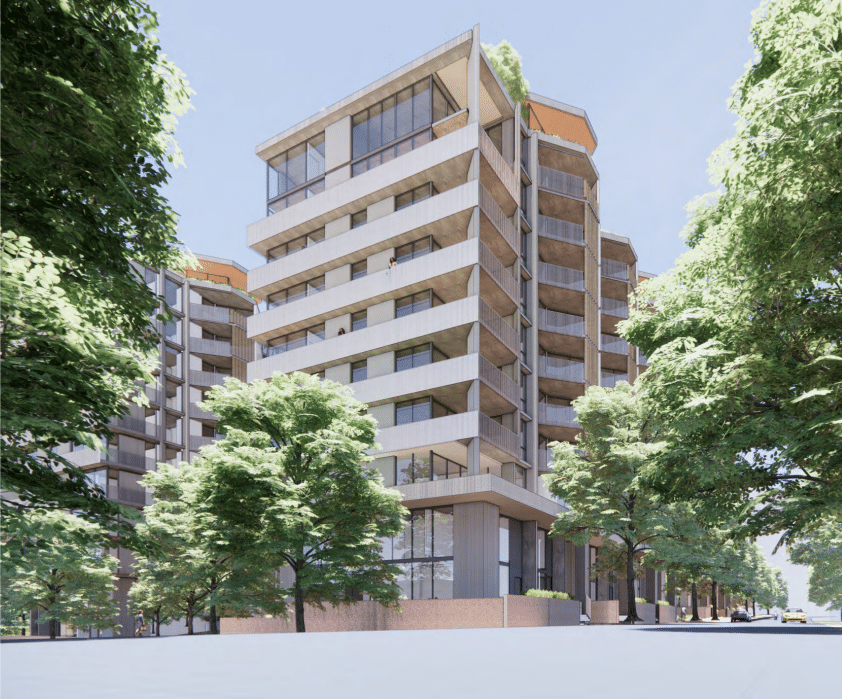
Eden Apartments, Belconnen
Deer Park Bowling Club Redevelopment